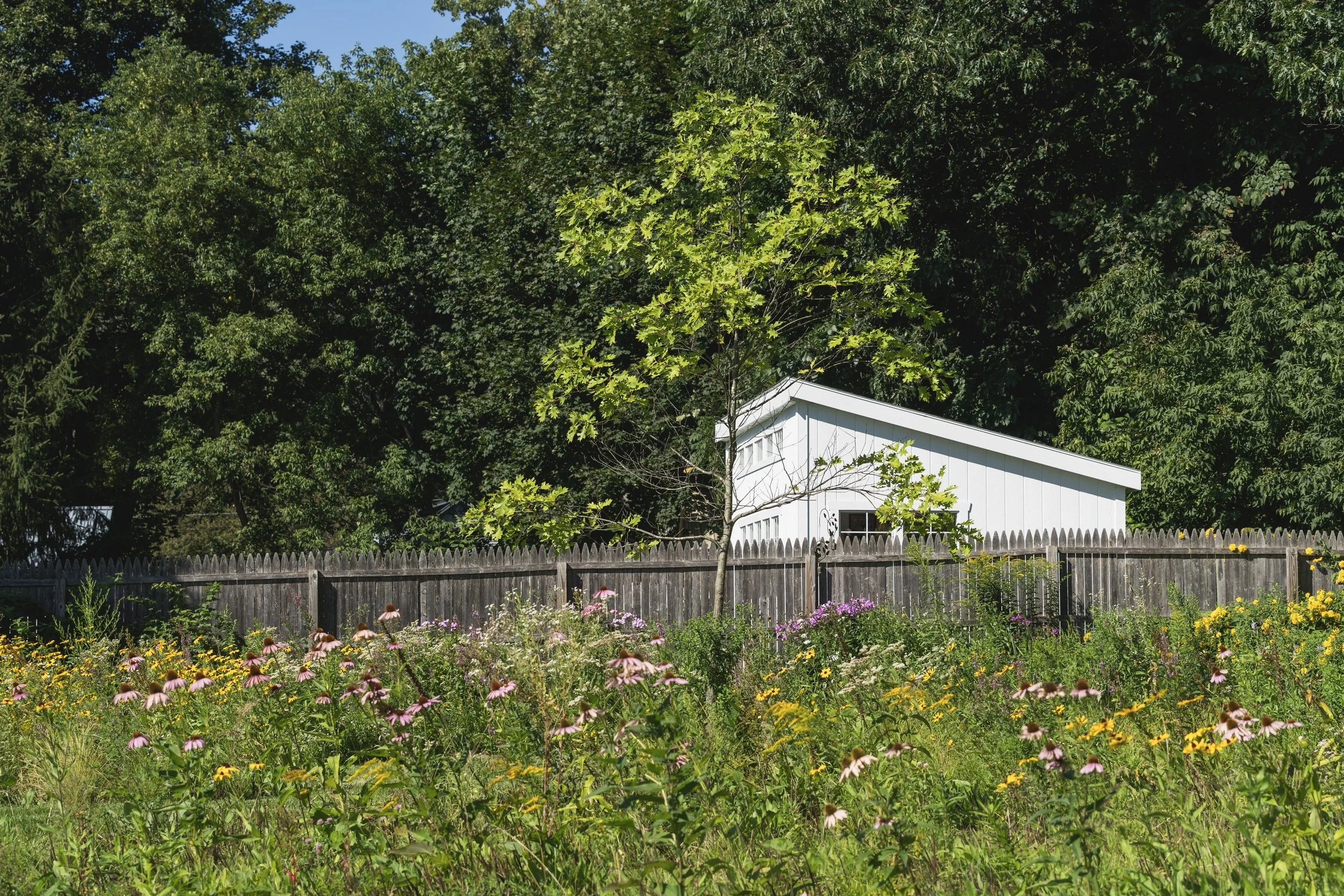
Meadow Metamorphosis!
Transform your lawn into a native wildflower meadow
Lawns? Over it! Calling all homeowners who are tired of mowing, watering, and fertilizing a lawn that nobody uses and doesn’t even look that good. We remove boring old turf grass and replace it with a designed native meadow: colorful wildflowers and gorgeous native grasses matched to your soil, alive with pollinators and birds, and mowed once a year instead of thirty times.
$300 · credited toward your project
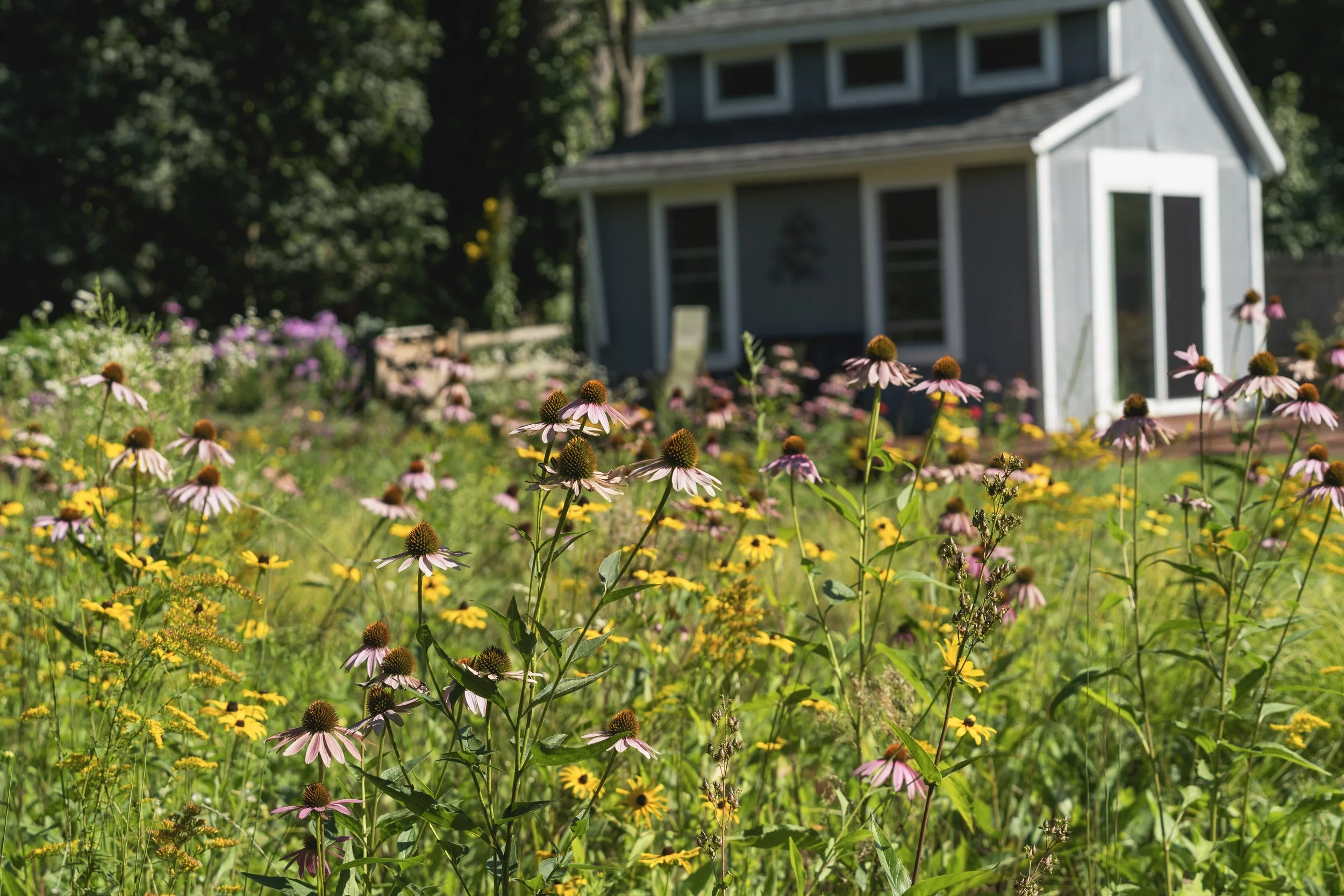
Why replace your lawn with a native meadow?
Maintaining a typical green American lawn is anything but green. It requires expensive chemical fertilizers and frequent mowing with fossil-fuel consuming equipment. And it gives almost nothing back to the local ecosystem.
A native meadow flips that math. Not only is it beautiful and beneficial to our more-than-human neighbors, it’s also easier and more affordable.
-
Mow once a year instead of every week from April to November.
-
Requires no irrigation once established; native meadow species are adapted to Rhode Island rainfall.
-
No fertilizer, no herbicide programs, no chemical inputs.
-
Blooms that shift from spring through late fall, feeding pollinators, songbirds, and fireflies.
-
Deep roots absorb stormwater and hold soil.
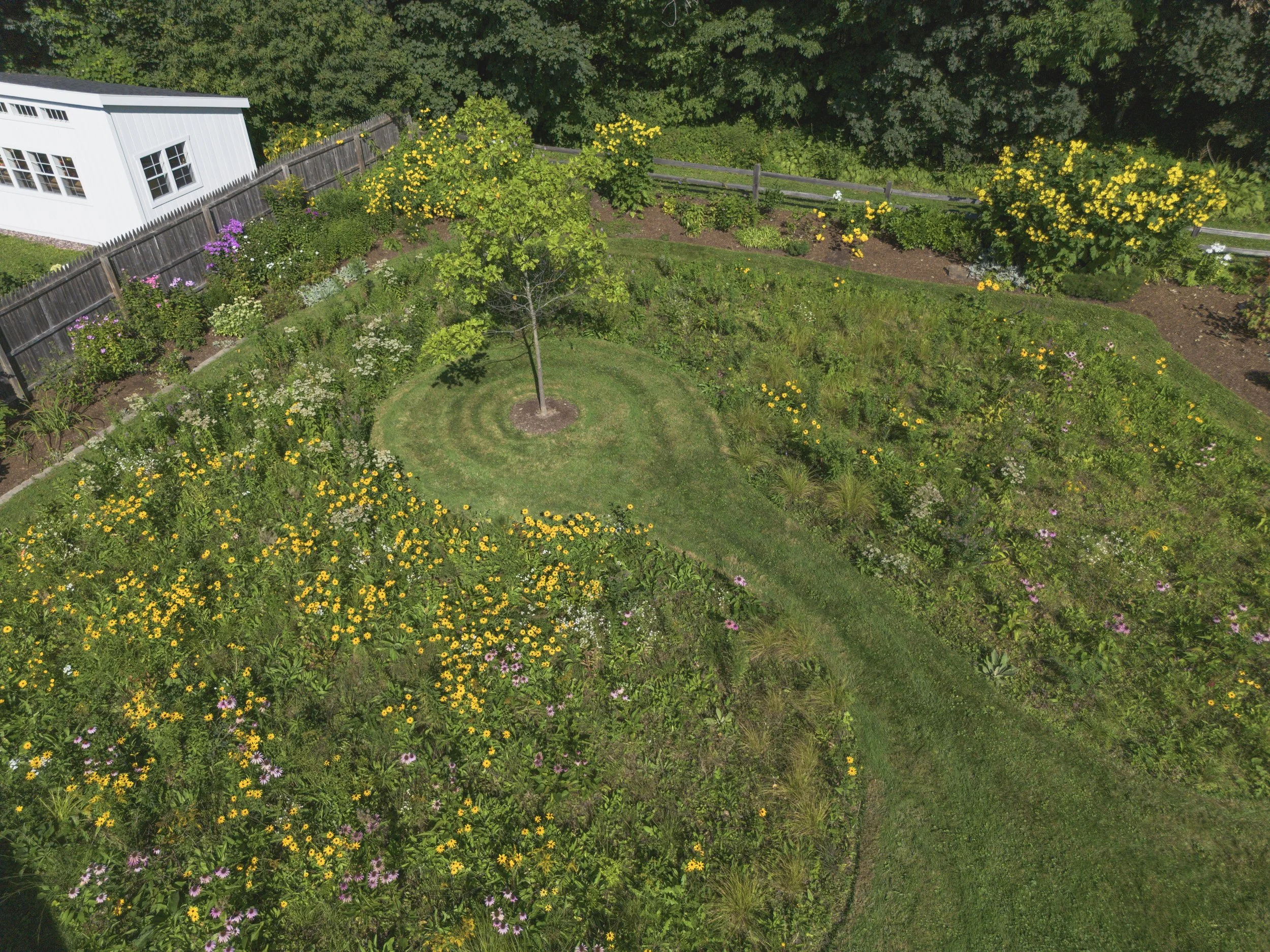
How Lawn-to-Meadow Conversion Works
Anyone can scatter a wildflower seed mix on grass. Almost none of it survives. A meadow that actually establishes comes from doing the unglamorous parts right, and this is where our process differs from a bag of seed.
Step 1: Site Assessment and Meadow Design
We evaluate your soil, sun, moisture, and existing vegetation, then design a custom planting plan of Rhode Island native wildflowers and grasses suited to your specific conditions. Every site gets its own mix; there is no one-size blend.
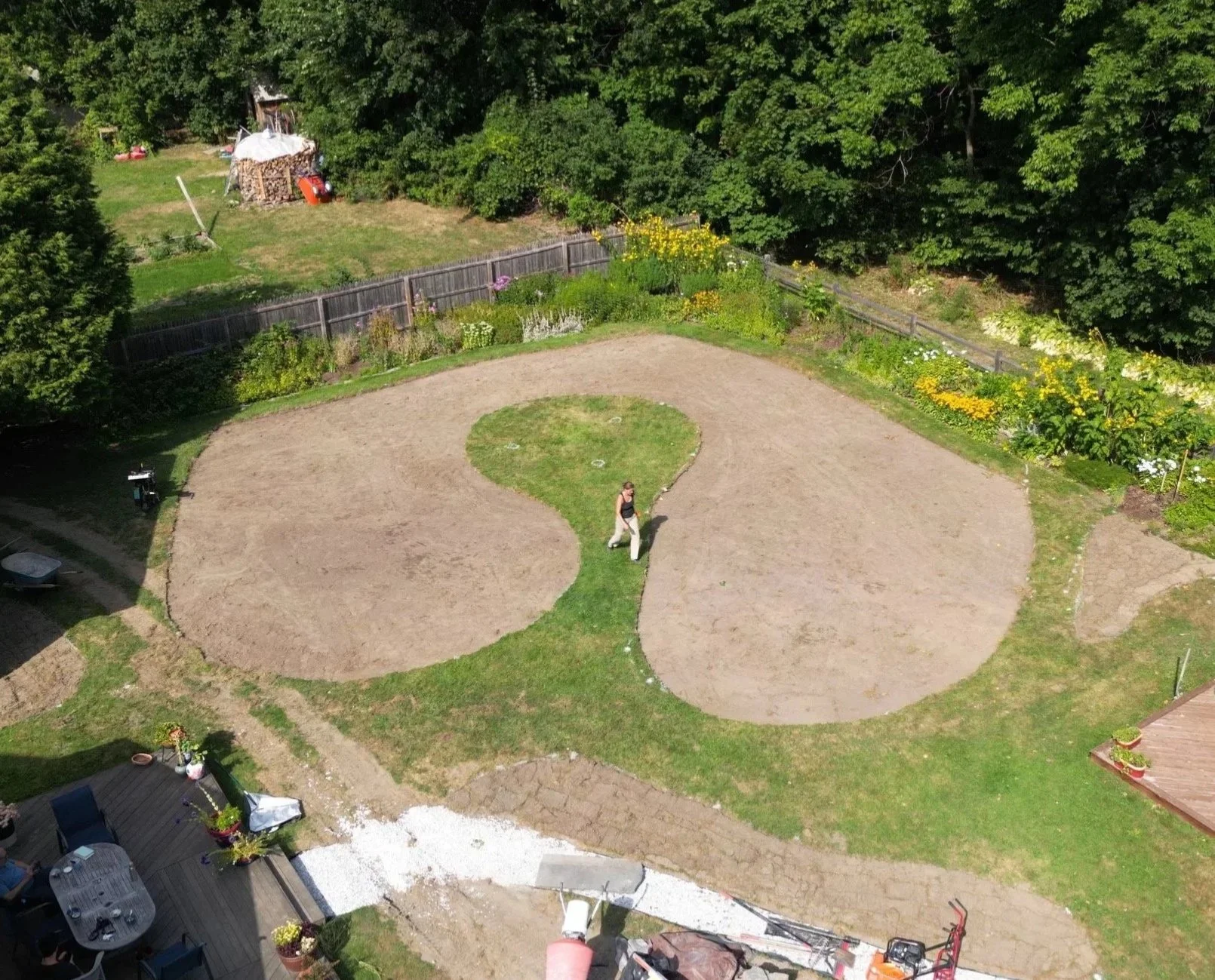
Step 2: Turf Removal and Site Preparation
This is the step that determines whether your meadow succeeds. We remove or strategically outcompete the existing lawn and exhaust the weed seed bank before a single native seed goes down. Depending on your site and timeline, this could take between one day or a whole year. With your needs and budget in mind, we will recommend the approach that best fits your situation.
Step 3: Seeding and Planting
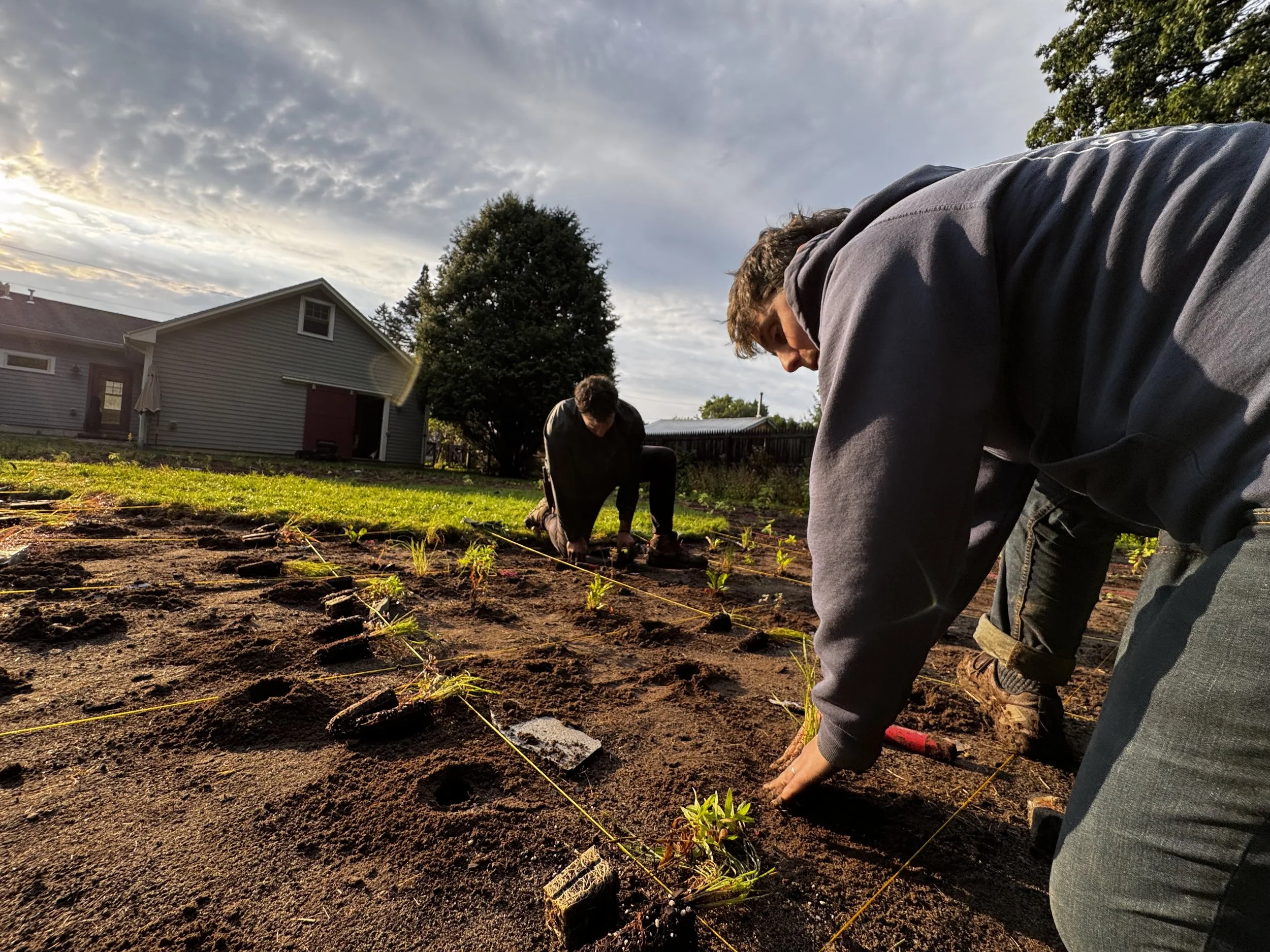
We seed in the right season for germination. Where the design calls for it, we install native plugs to anchor key areas for faster development of more diverse color and structure.
Step 4: Establishment Care
The first two seasons decide the next twenty years. We handle the establishment mowing and monitoring that keep annual weeds from outcompeting the natives we planted, or we coach you through doing it yourself.
Meadow Installation Pricing in Rhode Island
Meadow conversion is priced by area, site preparation method, and how much of the establishment care you want us to handle.
Common Questions About Lawn-to-Meadow Conversion
-
The question everyone is afraid to ask. Rhode Island municipalities have property maintenance codes written for neglected lots, and a designed meadow is not a neglected lot, but we understand the worry.
We design meadows to read as intentional: mown borders and pathways, defined edges, and layouts that signal care to neighbors and code officers alike. We can advise on your town's specific ordinance and the cultivated garden provisions that apply to designed native landscapes. Your meadow should make the neighborhood curious, not concerned, and we build that into the design.
-
Yes, and most people should. We recommend that you keep lawn where you actually use it: paths, play areas, seating. Meadow edges against mown turf also look intentional and beautiful.
-
You will get more butterflies, native bees, songbirds, and fireflies. Meadows do not attract rats, which follow food waste and dense low cover near structures — not wildflower plantings.
-
Usually both; seed is economical at meadow scale whereas plugs give faster structure in visible areas and let us guarantee key species establish. Your individual design will decide the balance.
-
The best time to start is several months before your target seeding window. Talk to us now and we will map your site onto the right calendar rather than rushing prep, which is the single most common reason meadows fail.
Ready to Retire your Lawn?
Book your meadow site consultation where we will walk the lawn together, test what's under it, and tell you exactly what it will take to begin the conversion process.